
Day-in-life as an AWS/Amazon TPM: Leading at Scale in the Age of Gen AI
When a project goes smoothly, everyone wonders if the PM was even needed.

A 4-minute read for experienced project managers ready to elevate their impact
Welcome to the Agile Admiral weekly newsletter. Your Essential Resource for Project Management Excellence.
Each week, I tackle reader questions about PMP preparation, implementing PMP in real-life projects, and a career as a Senior Project Manager.
If you’re new here, check these:
PMP Espresso - Hybrid Projects - Video | When Projects Turn Red: Navigating the Wave When It Hits | Junior vs Senior Project Manager | You cannot prevent all conflicts | How to fill PMP application? | Change Management in Medical IT
This Week at a Glance:
Monday - Thinking about marrying a Project Manager?
Wednesday - My Experience as an AWS/Amazon TPM: Leading at Scale in the Age of Gen AI
Friday - When a project goes smoothly, everyone wonders if the PM was even needed.
Wisdom Worth Sharing:
Do hard things. Because life is hard. And when you take on voluntary struggle, you’re better prepared for the involuntary struggle that inevitably enters your world. Embrace it. Pay the cost of entry with pride.
*I stole this from Sahil Bloom’s newsletter
Monday:
Thinking about marrying a Project Manager?
Do it.
It’s like having a life partner and a personal COO.
→ Every vacation is organised down to the hour.
→ The household budget actually balances.
→ Communication is clear, structured, and followed up.
→ Conflict resolution happens faster because retrospectives are part of daily life.
→ No one forgets anniversaries, birthdays, or deadlines. Ever.
→ Decisions get documented. Progress gets tracked.
→ Long-term goals aren’t dreams, they’re roadmaps.
PMs don’t leave things to chance.
They bring structure, accountability, and calm to chaos.
So yes, marrying a Project Manager isn’t just romantic. It’s strategic.

Wednesday:
My Experience as an AWS/Amazon TPM
Leading at Scale in the Age of Gen AI
By Vandana S
Working as a Sr Technical Program Manager at Amazon/Amazon Web Services has been one of the most challenging and rewarding experiences of my career. The scale, complexity, and pace of innovation here push you to grow in ways you never imagined. Today, I want to share what it’s really like to lead programs that span dozens of teams and cutting-edge technologies.
The Reality of Leading at Scale
As a TPM leading Gen AI initiatives, I coordinate with over 20 teams simultaneously. Let me be honest: you can’t know every minute detail of every workstream. What you can do is understand where to dive deep and where to maintain strategic oversight. Some areas demand my direct involvement, while others require periodic check-ins to stay informed for weekly director and VP reviews. This balance is critical to operating effectively at Amazon’s scale.
Two Programs That Defined My Journey
1. Digital Markets Act: Racing Against a Legal Deadline
The Digital Markets Act (DMA) program was a masterclass in cross-organizational coordination. Working with 25+ development teams under a hard legal compliance deadline taught me that structure is everything. We couldn’t afford ambiguity. Big corporates across the industry were watching, and failure wasn’t an option.
My approach? Create a SWAT team of Senior Engineers and Senior TPMs embedded within each organization. We established daily standups to track progress, identify blockers, and maintain momentum. This core team cascaded work across their orgs, creating a ripple effect that drove us to a successful launch. The lesson: when facing complexity, build your leadership network first, then let that network scale your impact.
2. Amazon Quick Research: Building Gen AI from Scratch
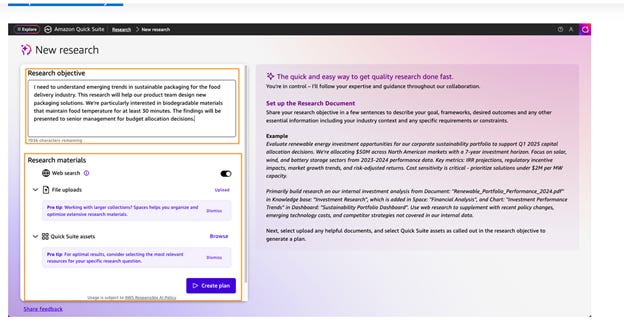
Earlier this year, I had the privilege of working on Amazon/AWS Q, specifically delivering the Quick Research program from the ground up. This AI-powered agent transforms how organizations access insights by combining internal knowledge with public internet data, delivering expert-level research in hours instead of weeks.
This program required orchestrating multiple dimensions simultaneously: partnering with teams to deliver web search solutions, collaborating with Science teams to develop and evaluate POCs, integrating these with Engineering solutions for beta releases, and ultimately launching to general availability in Oct. Each phase demanded different skills, from technical deep dives to stakeholder management to launch coordination.
How I Structure My Days
I organise my work across four key pillars that keep programs on track:
a. Planning: Setting the Foundation
The planning phase determines whether a program succeeds or struggles. I ensure all the right teams are engaged, proper mechanisms are established, resources are allocated appropriately, and the program sits high enough on each org’s priority list. This phase consumes significant time, but it sets the tone for everything that follows.
During execution, I constantly assess where we’re stuck. Are product requirements unclear? Are timelines slipping? Do partner integrations need attention? Is our executive communication framework working? Based on the program phase and these signals, I adapt my task list and meeting schedule accordingly.
b. Cross-Team Collaboration: Building the Ecosystem
Most of my work involves orchestrating partnerships across diverse teams. Partner teams ensure integration deliverables arrive on time. Engineering teams build and ship features. Security teams conduct thorough threat assessments and testing. Legal teams ensure that program is legally compliant in every way. Compliance teams work toward certifications like PCI, SOC , HIPAA cert. Each relationship requires different communication styles and different levels of involvement, but all are essential to program success.
c. Problem-Solving Sessions: Unblocking Progress
I regularly lead dedicated problem-solving sessions to unblock teams. These might focus on resolving integration issues for end-to-end applications or developing science POCs for new Gen AI features. These sessions form the backbone of successful programs where theoretical plans meet practical reality, and where teams build the confidence to move forward.
d. Continuous Learning: Staying Ahead of the Curve
Being an effective TPM at Amazon/AWS means staying current with the services your programs use, understanding new compliance requirements as they emerge, and tracking Gen AI features and competitors entering the market. The landscape shifts constantly, and your value as a TPM partly comes from connecting dots others might miss.
What I’ve Learned
Amazon’s scale forces you to develop mechanisms and processes that can operate independently of you. You can’t be in every meeting or review every decision. Instead, you build systems that surface the right information at the right time, empower teams to make good decisions, and escalate only what truly needs your attention. The work is demanding. The pace is relentless. But when you see a program, you’ve shepherded from ambiguity to clarity launch successfully makes you feel free proud about yourself.
My Advice for You as a TPM
Embrace the chaos, build strong mechanisms, invest in relationships across teams, and never stop learning. The challenges are real, but so are the opportunities to make meaningful impact.
Friday:
When a project goes smoothly, everyone wonders if the PM was even needed.
When it falls apart, everyone asks where the PM was.
That’s the paradox of great project management: when you do it right, it looks effortless.
You don’t make noise.
You remove friction.
You keep chaos invisible.
A strong PM is like a stabiliser you only notice when it’s gone.
→ Deadlines hold because priorities are clear.
→ Tensions fade because conflicts are managed early.
→ Progress feels natural because alignment is constant.
So if everything looks calm and effortless, it’s not luck.
It’s the result of someone steering hard behind the scenes.

See you next week.

Follow me on LinkedIn | YouTube | Instagram
If we are not connected via LinkedIn, click here → LinkedIn
PMP prep is not a walk in the park. An average student spends 4 to 6 months preparing for exams. There is a different way of doing this, and I’m happy to show you “how”. When you’re ready, follow the links below:
👉🏼Do it together - join the PMP Operation System
👉🏼Do it 1-on-1 - join 8-week coaching program